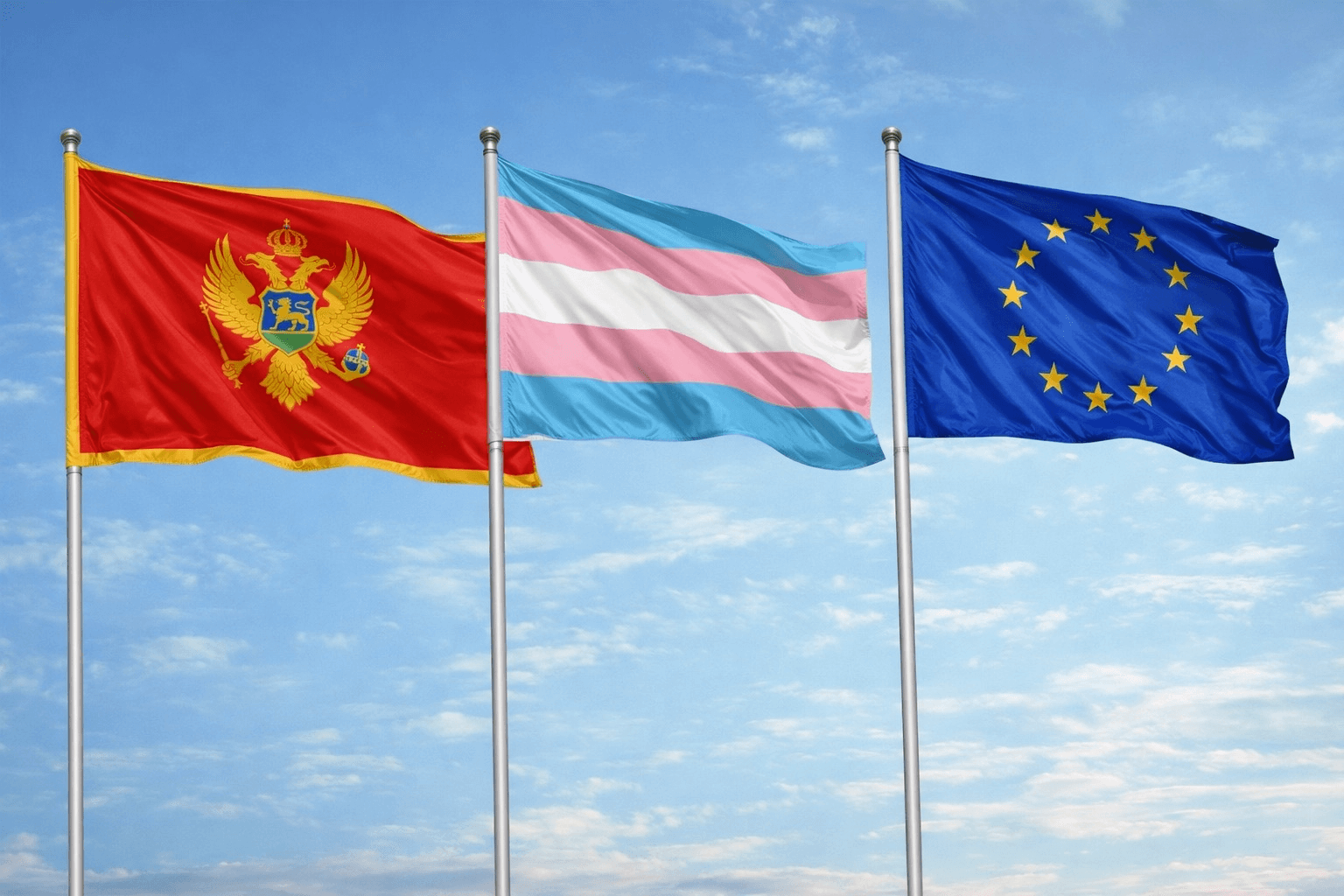
The latest judgment of the Court of Justice of the European Union further confirms the standard that European institutions and international bodies have emphasized for years: states must provide legal recognition of gender identity so that trans people can exercise basic rights, including the right to freedom of movement and equal access to public life. For Montenegro, as a candidate country for membership, this decision once again confirms the importance and necessity of adopting a law that bases this right on self-determination.
The European Parliament and the European Commission have already stated that Montenegro has still not adopted this law, despite the fact that its adoption is foreseen in the EU Accession Program and the Action Plan for Chapter 23.
In practice, this means that trans people in Montenegro still have to go through medical procedures in order for their identities to be legally recognized, which represents a serious encroachment on bodily integrity and basic rights, but the inability to adhere to this condition further increases the risk of discrimination in everyday life.
With this ruling, the Court clearly indicated that the discrepancy between a person’s gender identity and the information in official documents creates serious obstacles in everyday life – from travel and employment to access to necessary services. In such situations, trans people are exposed to forced identity disclosure, humiliating procedures and an increased risk of discrimination.
What is particularly important is that the judgment confirms that states cannot condition the legal recognition of gender identity on medical interventions, including surgery or sterilization, nor can they invoke the absence of a national procedure as a justification for denying that right.
The upcoming deadline for the adoption of the Law on Legal Recognition of Gender Identity, defined by the European Union Accession Program for the second quarter of this year, therefore represents a key test of political responsibility of institutions. Montenegro now has a clear opportunity to prove that it understands the European path as an obligation towards its own citizens. Although the adoption of the law is long overdue, this is a unique chance for Montenegro to clearly demonstrate that it respects European values and guarantees the right to legal recognition of gender identity. The government and MPs are given the opportunity to confirm their responsibility and credibility, and for this key step in the protection of human rights to finally become a reality.