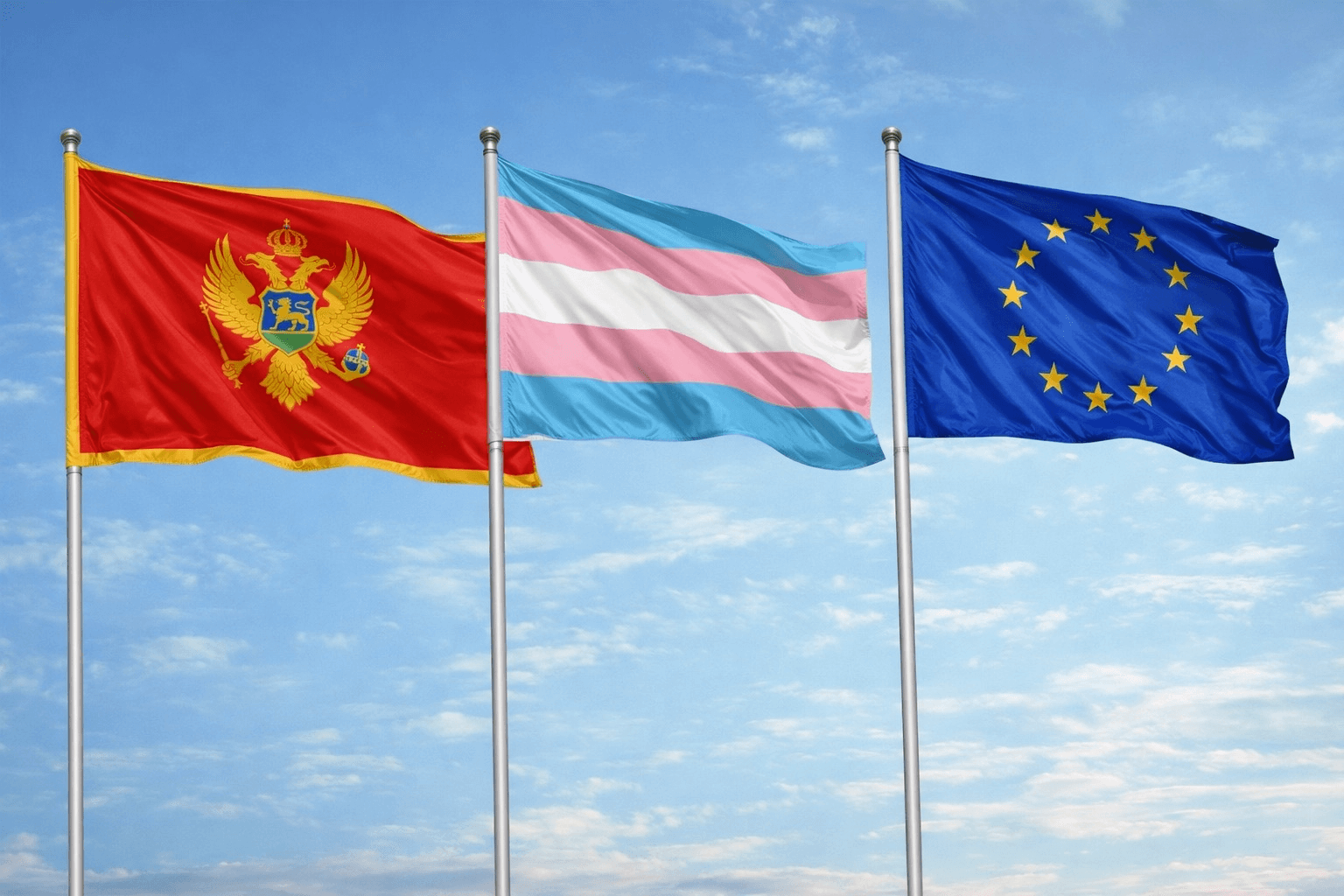
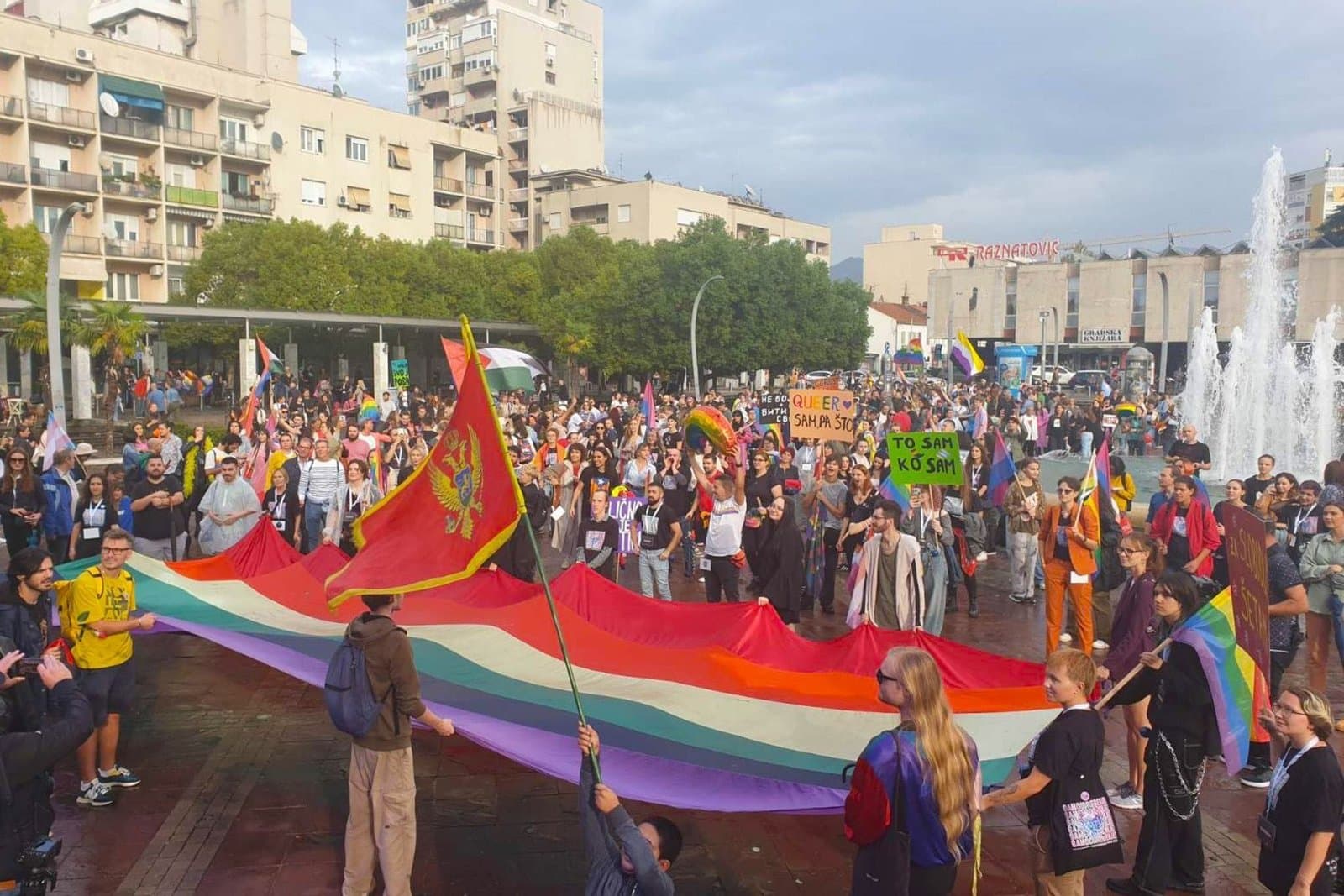
Association Spektra, ahead of Montenegro Pride, filed a complaint with the Protector of Human Rights and Freedoms due to the continuous violation of transgender persons’ rights to private life, dignity, personal autonomy, and physical and psychological integrity, as well as due to suspected prolonged and systemic discrimination on the grounds of gender identity. The lack of an effective legal gender recognition procedure without mandatory medical interventions—which result in the sterilization of individuals undergoing them—and the continuous delay in establishing an appropriate legal framework directly lead to the violation of the aforementioned fundamental human rights.
The inability to align the gender marker, unique personal identification number (JMBG), and other personal data in documents with one’s gender identity can result in a transgender person being forced to disclose their trans identity every time they are required to show an identification document. This has direct significance and often negative and/or endangering consequences for the physical and/or psychological health of the person, as well as for the realization of rights and access to institutions and services, including employment, education, healthcare, banking, and other services, as well as proceedings before public authorities. A particularly severe consequence arises when the possibility of legal recognition is conditional upon a medical procedure that the person does not want or that is not possible due to their health condition. We emphasize that there is no clear rulebook governing this issue; rather, our practice shows that the Ministry of the Interior arbitrarily carries out the process of changing the gender marker in documents based on its own interpretation of the Law on Registers of Births, Marriages, and Deaths, which merely notes in Article 6 that it is possible to change the identification number after a sex reassignment, without defining in any way what “sex reassignment” specifically entails. Thus, although there is no legal limitation on legal gender recognition based on self-determination, the Ministry of the Interior does not allow the change of gender marker in documents without proof of completed sterilization.
The Draft Law on Legal Gender Recognition Based on Self-Determination was presented to the public on February 14, 2024, when the Ministry of Human and Minority Rights opened a public consultation that lasted 30 days. The proposed legislative solution was intended to establish a legal procedure in which legal gender recognition would not be conditional upon surgical or other medical interventions, and the process would be carried out exclusively based on self-determination.
This legislative process has not been completed. Official Government documents show that the adoption of this legal solution was repeatedly planned and delayed. The Government’s Work Program for 2026, in the section related to unfulfilled obligations under the code ND 173, states that the Draft Law was not established because it was not voted on despite being ready, as well as that it lacked the support of a portion of the ministers. As early as June 25, 2025, the Ministry of Human and Minority Rights announced that competent Government bodies considered the Draft Law, but that its vote is still pending. At the same time, the adoption of the law has been planned multiple times in documents related to Montenegro’s accession to the European Union and reforms under Chapter 23. According to publicly available official information verified on October 2, 2026, the Government of Montenegro has not established the Draft Law nor submitted it to the Parliament of Montenegro, nor has the law been passed.
Having the above in mind, we request from the Protector of Human Rights and Freedoms of Montenegro to:
- examine and determine whether the continuous failure to provide a clear, fast, transparent, and accessible procedure for legal gender recognition that is not conditional upon sterilization, surgical, or other unwanted medical interventions constitutes a violation of transgender persons’ rights to private and family life, dignity, personal autonomy, and physical and psychological integrity;
- examine whether the current state of affairs constitutes discrimination on the grounds of gender identity, including whether there are elements of prolonged and/or systemic discrimination in relation to Article 17 of the Law on Protection of Equality and Prohibition of Discrimination;
- request a full statement from the Government of Montenegro and the Ministry of Human and Minority Rights regarding the current status of the Draft Law, all actions taken so far, the reasons why the Draft was not established, and concrete deadlines for further action;
- obtain information from competent authorities, including the Ministry of the Interior and the Ministry of Health within their respective purviews, regarding the current legal basis and administrative practice for changing the gender marker and other related data in official records and documents, including precise data on what medical documentation is required and on the basis of which regulation or other act;
- examine what measures competent authorities have taken to implement the recommendations of the UN Human Rights Committee, CEDAW, ECRI, the European Commission, and previous recommendations of the Protector institution itself regarding the rights of transgender persons;
- in accordance with Article 27 of the Law on the Protector of Human Rights and Freedoms of Montenegro, initiate an initiative towards the Government of Montenegro and other competent authorities for the adoption or amendment of laws, other regulations, and general acts necessary to harmonize the domestic legal order with internationally recognized standards in the field of legal gender recognition;
- recommend to the Government of Montenegro that, without further unjustified delay, it undertake actions within its jurisdiction to establish the Draft Law and set up a legal framework enabling legal gender recognition with full respect for the dignity, privacy, personal autonomy, and bodily integrity of transgender persons, and submit the law to the Parliament of Montenegro for adoption;
- recommend to competent authorities that, within the bounds of the existing legal framework and their powers, until the entry into force of an appropriate legal solution, they eliminate all medical requirements that are not prescribed by law, necessary, and aligned with the European Convention on Human Rights and the case law of the European Court of Human Rights;
- consider the possibility of acting under an expedited procedure in accordance with Article 58 of the Law on the Protector of Human Rights and Freedoms of Montenegro, bearing in mind the scope of publicly available official documents, international findings, and previous positions of the Protector institution itself;
- set specific deadlines in the opinion for acting upon the recommendations and monitor their execution in accordance with the Law.
Self-determination is a universal value whose importance Montenegro, if anyone, knows well. Given the fact that the ruling structures do not want to provide us with the right guaranteed to us by the Constitution, this complaint to the Protector is one of the first steps by which we will fight to realize our rights.
We demand self-determination now. See you at Pride.